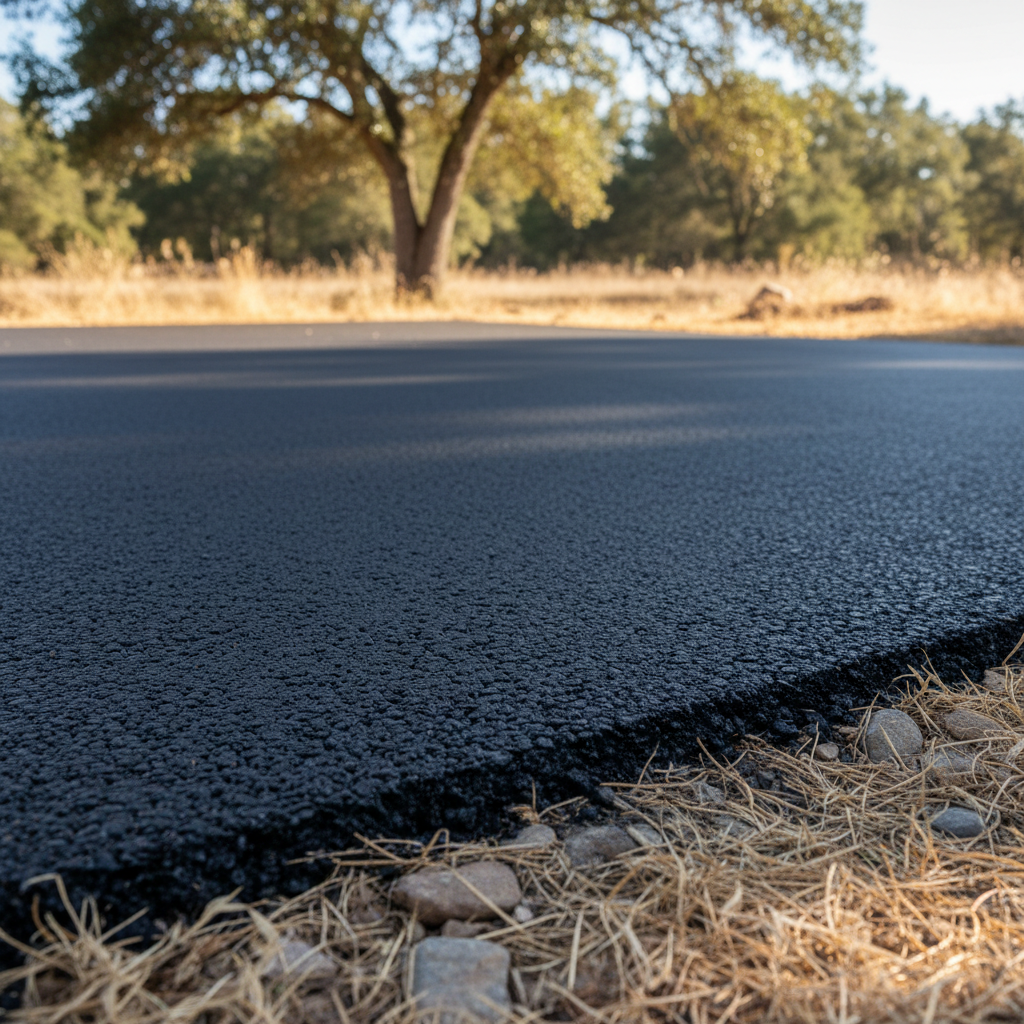
Tackling a larger asphalt surface on your residential property—like an extended side-parking pad, an RV area, or a shared multi-family driveway court—takes much more muscle than a standard two-car strip. If you live out toward the orchards or have expansive clay subbase conditions common to our area, poor drainage turns a flat space into a muddy disaster when winter rains hit.
Before the Project Starts: Planning and Prep
Homeowners can handle the initial legwork to save some cash. Map out your utility lines by calling 811 before a single shovel hits the dirt, because digging blind in Butte County is a fast track to broken lines. Clear out any brush, old gravel, or weeds from the footprint. What you should not try to DIY is the subgrade engineering or heavy grading. If the earth is not sloped correctly away from structures, water pools and ruins the asphalt within a couple of seasons.
During Paving: DIY vs. Heavy Machinery
Laying hot-mix asphalt is not a weekend DIY project. You cannot just pick up a few bags at the local big-box store and rake out a smooth parking pad. Hot mix arrives around 300 degrees, and you have a very narrow window to spread and compact it before it cools down. Chico Asphalt Paving uses heavy steel-wheel rollers and specialized paving gear to lock that aggregate down tight. If you try to compact a large parking area with a rented hand tamper, it is going to ripple and crumble under vehicle weight by next summer's heatwave.
After Paving: Curing and Upkeep
Once the crew rolls out, your job begins again. Fresh asphalt needs time to cure fully. Keep heavy vehicles and sharp RV jacks off the new surface for at least a few weeks, especially when temperatures spike in the valley. Homeowners can realistically handle the light maintenance down the road, like keeping debris swept off the edges and watching for early hairline cracks. When those show up, sealing them promptly stops water from punching through to the base rock.