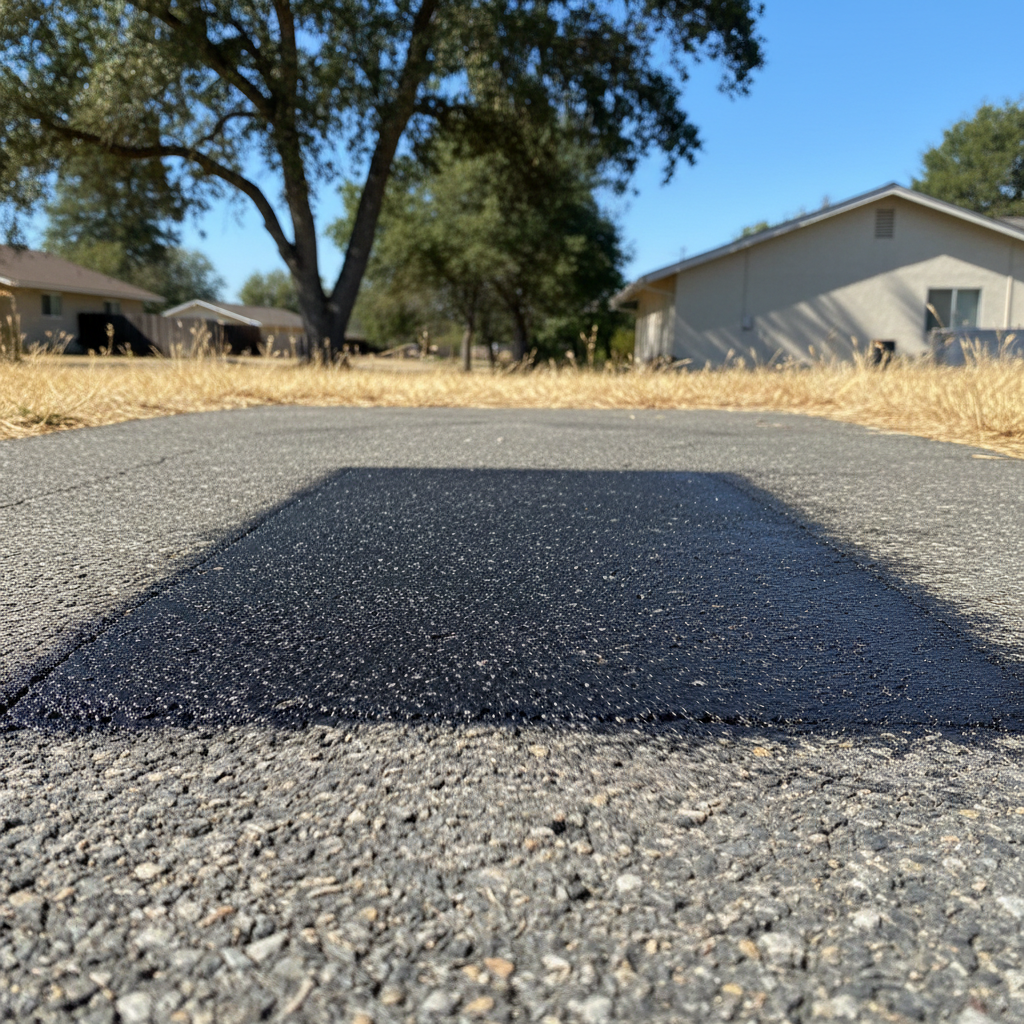
Alright, let's talk about your driveway. You've probably noticed it – those little cracks spiderwebbing out, or maybe a full-blown pothole that's become a permanent resident. It's an eyesore, sure, but it can also be a tripping hazard or lead to bigger problems if you ignore it. So, what do you do about it?
A lot of folks in Chico wonder if they can fix their asphalt themselves. And the answer is, sometimes you can, but sometimes you really shouldn't. It all depends on the type and severity of the damage. Let's break it down.
Before You Start: Assess the Damage
First things first, take a good, hard look at your asphalt. Is it just a few small, hairline cracks? Or are we talking about wide cracks, deep potholes, or areas that are crumbling and alligatoring? The scale of the problem is your first clue.
- Hairline Cracks (less than 1/4 inch wide): These are usually pretty easy to handle yourself. They're often caused by normal wear and tear, sun exposure, or minor ground movement.
- Larger Cracks (1/4 inch to 1 inch wide): You can probably still tackle these, but you'll need a bit more effort and the right materials.
- Potholes or Alligator Cracking: This is where it gets tricky. Small, shallow potholes might be DIY-able, but anything bigger than a dinner plate or deeper than an inch, especially if the base underneath is compromised, is usually a job for the pros. Alligator cracking (lots of interconnected cracks that look like alligator skin) almost always means your base layer is failing, and that's not a DIY fix.
Also, consider the age of your driveway. If it's relatively new and just has minor surface issues, DIY is more feasible. If it's decades old and hasn't had much maintenance, even small cracks might be symptoms of deeper structural problems.
DIY Asphalt Repair: What You Can Do
For those smaller cracks and minor issues, you absolutely can roll up your sleeves and get to work. Here's what you'll generally need and how it goes:
Materials: You'll want a good quality asphalt crack filler (liquid pourable or a caulk-gun type), a stiff wire brush, a broom, and maybe some sand or aggregate for larger cracks.
The Process:
- Clean it out: This is crucial. Use that wire brush and broom to get all the dirt, debris, and loose bits out of the crack. You want a clean, dry surface for the filler to adhere to. I've seen folks skip this step and their repairs don't last a season.
- Fill it up: For hairline cracks, just pour or squeeze the crack filler directly into the crack. Don't overfill it – you want it flush with the surface, maybe slightly mounded as it'll settle. For wider cracks, you might need to tamp some sand or small aggregate into the bottom first to provide a stable base before applying the filler.
- Smooth it out: Use a trowel or even a piece of wood to smooth the filler flush with the surrounding asphalt.
- Let it cure: Follow the manufacturer's instructions for drying time. Don't drive on it too soon!
For small, shallow potholes (think less than 6 inches across and 1 inch deep), you can use a cold patch asphalt mix. You'll clean out the hole, pour in the mix, and then compact it thoroughly. You can drive over it to help compact it, but a hand tamper or even a heavy plate works best. It's a temporary fix, but it'll get you by.
When to Call Chico Asphalt Paving
Look, I'm all for saving a buck and doing things yourself. But there are definitely times when trying to DIY a repair will cost you more in the long run, or just won't hold up. Here's when you should pick up the phone and call us:
- Large, Deep Potholes: If a pothole is bigger than a dinner plate, deeper than an inch, or if you can see the dirt and gravel base underneath, it's a structural problem. Cold patch won't cut it. We'll need to cut out the damaged section, repair the base, and then lay down new hot asphalt.
- Extensive Alligator Cracking: This indicates a failing base layer. You can fill the cracks all day long, but they'll just reappear because the underlying problem isn't fixed. This usually requires removing the old asphalt, re-grading and compacting the sub-base, and then laying new asphalt.
- Drainage Issues: If you've got standing water on your driveway after a good rain, that's a serious problem. Water is asphalt's worst enemy. This often means your driveway isn't properly graded, and that's definitely not a DIY fix. It needs professional assessment and possibly re-sloping. We see this sometimes in older neighborhoods like The Esplanade where driveways have settled over the years.
- Multiple, Widespread Cracks: If your whole driveway is a patchwork of cracks and repairs, it's probably time for an overlay or even a full replacement. You can only patch so much before it becomes a losing battle.
- Root Damage: Tree roots can wreak havoc on asphalt. If you've got a big oak or sycamore lifting your driveway, that's a complex issue that needs professional attention to address the root problem (pun intended!) and properly repair the asphalt.
Ultimately, a good repair is about more than just filling a hole; it's about understanding why the damage happened in the first place and addressing that. Sometimes, a quick DIY fix is all you need. Other times, you're just putting a band-aid on a bigger wound. If you're unsure, or if the damage looks extensive, don't hesitate to give Chico Asphalt Paving a call. We're happy to take a look and give you an honest assessment of what needs to be done. It's always better to get it right the first time.