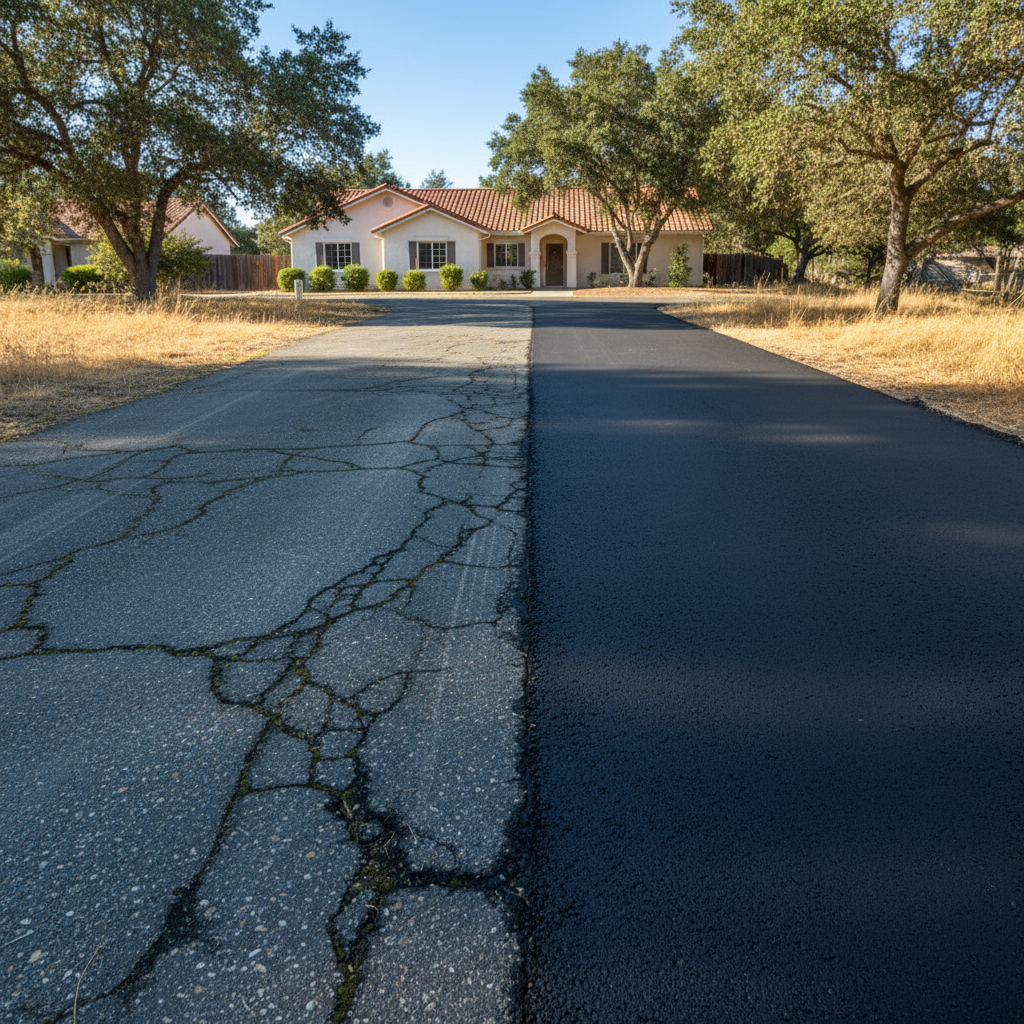
Alright, let's talk about your driveway. You've got some cracks, maybe a pothole or two, and you're wondering what's the best way to fix it without breaking the bank or having to do it all over again next year. I see this all the time here in Chico, especially with our hot summers and then those wet winters that really work on the pavement.
Traditional Cut-and-Patch: The Old Reliable
This is probably what you picture when you think about asphalt repair. We come out, mark off the damaged area, cut it out with a saw, dig out the old stuff, clean it up, and then fill it with new hot asphalt. Then we compact it down.
- Cost: Generally, this is your more budget-friendly option upfront, especially for smaller, isolated potholes. It's less specialized equipment, so the labor costs can be a bit lower per square foot for a small job.
- Durability: If done right, it's pretty durable. The key here is 'done right'. You need good compaction, and the edges where the new asphalt meets the old need to be sealed properly. If not, water can get in there and undermine the patch.
- Maintenance: You'll want to keep an eye on those seams. If they start to crack, a good crack sealant can extend the life of the patch.
- Appearance: This is where it often falls short. You'll almost always have a visible seam. The new asphalt will be a different color and texture than your existing driveway, especially if your driveway is older and faded. It's a patch, and it looks like a patch. If you've got an older home in the avenues, you know what I'm talking about; a big dark patch can stick out like a sore thumb on a faded driveway.
Infrared Asphalt Repair: The Modern Approach
Now, this is a bit more advanced. With infrared repair, we use an infrared heater to heat up the existing asphalt around the damaged area. It softens the old asphalt, allowing us to rake it, add a bit of new material if needed, and then blend it all together. It's like recycling your driveway in place.
- Cost: For smaller, isolated repairs, it might be a little more than a traditional patch because of the specialized equipment. However, for larger areas of alligator cracking or multiple small potholes close together, it can become very competitive, even cheaper, because it's more efficient.
- Durability: This is where infrared really shines. Because we're heating and blending the old asphalt with new material, you get a seamless repair. No cold joints for water to penetrate. It creates a monolithic bond, meaning it's all one piece again, which is incredibly strong and resistant to future cracking.
- Maintenance: Very low. Since there are no seams, there's less for you to worry about sealing down the line.
- Appearance: This is the big win for infrared. The repair blends in much better with your existing asphalt. It's not perfectly invisible, especially if your driveway is very old and faded, but it's significantly less noticeable than a cut-and-patch. It looks much more like a natural part of your driveway.
My Recommendation for Chico Homeowners
Look, both methods have their place. If you've got one tiny, isolated pothole and you're on a super tight budget, a traditional cut-and-patch might get you by for a while. But honestly, for most homeowners in Chico dealing with typical driveway wear and tear – those spiderweb cracks, a few potholes, or areas where the asphalt is just getting brittle – I almost always recommend infrared asphalt repair.
Why? Because of the durability and appearance. We get those extreme temperature swings here. A traditional patch with its cold joints is just asking for trouble down the road when the asphalt expands and contracts. Infrared creates a much stronger, seamless repair that holds up better to our conditions. You're getting a longer-lasting fix that looks a whole lot better, and in the long run, that means less hassle and more value for your money.
At Chico Asphalt Paving, we've invested in the right equipment and training for infrared repair because we believe it's the best solution for our customers. You get a better repair that lasts longer. Give us a call, and we can take a look at your driveway and give you an honest assessment of what's going to work best for you.